Eco-Tech
Governor Tom Wolf Announces Largest Government Solar Commitment in U.S.
by Amanda Waltz
March 31, 2021
Pennsylvania has an identity as being a Rust Belt state defined more by industrial steel and coal than with burgeoning energy technology like solar or wind turbines. Governor Tom Wolf has apparently set out to change that with a major new deal.
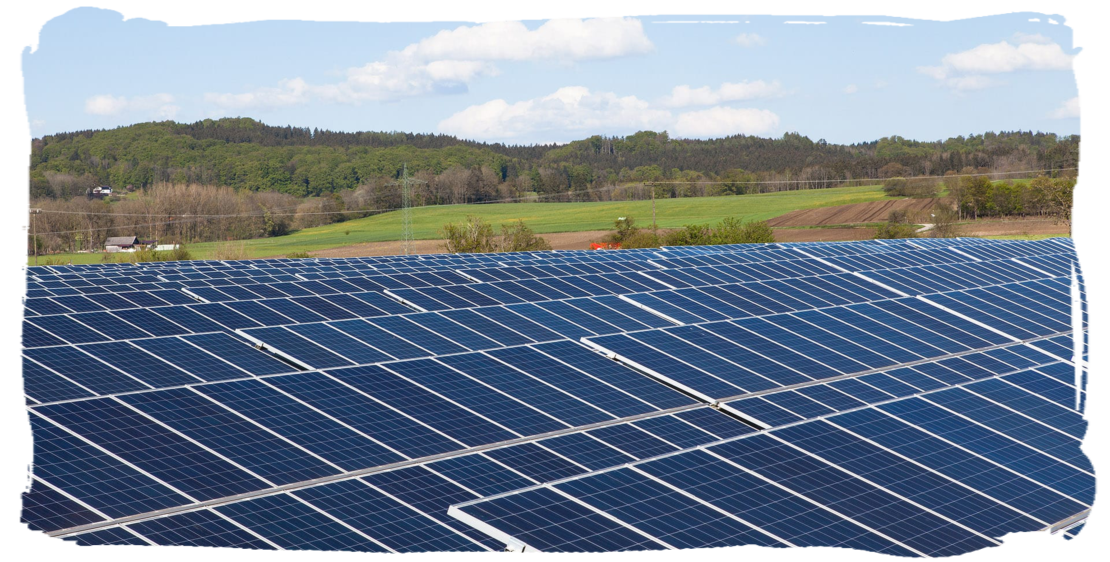
In late March, Gov. Wolf announced Pennsylvania PULSE (Project to Utilize Light and Solar Energy), wherein seven solar arrays will produce 50 percent of the state government’s electricity. The initiative is being touted as the largest solar commitment by any government in the U.S. to date by providing 100 percent of the electricity for 16 Commonwealth of Pennsylvania agencies.
Pennsylvania PULSE is being held up as a step towards not only lowering the state’s carbon emissions, but driving more economic opportunities for residents.
“Pennsylvania has been a national energy leader for more than one hundred years,” says Wolf in a press release. “As we continue to diversify our grid with clean renewable sources of energy, we want to maintain Pennsylvania’s leadership position and bring the associated economic, health and environmental benefits to all Pennsylvanians.”
The initiative is being made possible through a power purchase agreement with Constellation, a major energy provider. Under the contract, the state will source solar electricity through the end of 2037.
The project is part of Gov. Wolf’s GreenGov Council, which he describes as charging “state government with leading by example in demonstrating sustainable governance and lowering greenhouse gas emissions to reduce the risks of climate change in Pennsylvania.” The council is co-chaired by the Departments of General Services, Environmental Protection, and Conservation and Natural Resources.
It also falls in line with the Climate Change Executive Order Wolf signed in 2019 to lower Pennsylvania’s greenhouse gas emissions 26 percent by 2025 and 80 percent by 2050 compared with 2005 levels.
Another aspect of Wolf’s order strives to create at least 40 percent of electricity from clean sources located in the state, something PULSE seems primed to do. The arrays will be built throughout the state in the counties of Columbia, Juniata, Montour, Northumberland, Snyder, and York, and are expected to deliver 361,000 megawatt-hours of electricity per year.
Pennsylvania PULSE includes an agreement with Lightsource bp, a London-based leader in solar development and management. Lightsource bp will build, own, and operate the arrays, which are expected to lower carbon dioxide emissions statewide by 157,800 metric tons each year, the equivalent of emissions produced by 27,000 homes, or of taking 34,000 cars off the roads, according to statistics from the U.S. Environmental Protection Agency.
“Reducing greenhouse gas emissions is crucial to slowing climate change and protecting our health and safety, environment, and economy,” says Pennsylvania Department of Environmental Protection Secretary Patrick McDonnell, who adds that over 85 percent of the state’s greenhouse gas emissions come from energy production and use.
McDonnell adds that research shows the clean energy sector is a “leading creator of quality jobs in Pennsylvania, bringing positive economic impacts as well.” In total, Pennsylvania PULSE is projected to create over 400 jobs, mostly in the area of construction.
Local environmental groups are already applauding Pennsylvania PULSE. This includes PennFuture, a nonprofit focused on tackling polluters, enforcing environmental protection laws, and transitioning Pennsylvania to a clean energy economy.
In a statement, Rob Altenburg, PennFuture’s Senior Director for Energy and Climate, calls the initiative “both historic and sorely needed as we work to combat climate change and reduce our carbon footprint in Pennsylvania.”
“This power purchase agreement will undoubtedly benefit Pennsylvania’s economy, environment and its residents by combating climate change, reducing pollution, and creating jobs while also insulating the Commonwealth from the rising costs of fossil fuels,” says Altenburg.
Pennsylvania PULSE is expected to begin operation on January 1, 2023.
Amanda Waltz
Amanda Waltz is a regular columnist with The Green Voice Weekly Newsletter