Eco-Tech
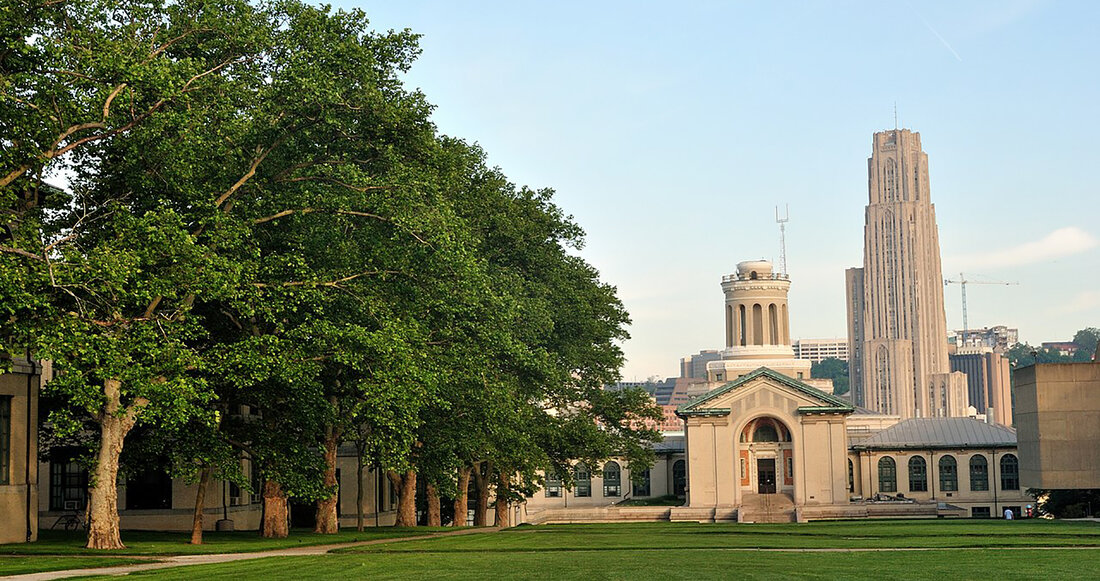
The Mall at Carnegie Mellon University, Pittsburgh. Hamerschlag Hall in
the foreground and Cathedral of Learning, University of Pittsburgh in
the background. Carnegie Mellon University
in Pittsburgh, Pennsylvania
will use a $150 million gift from the Richard K. Mellon Foundation.
Photo credit: Wikimedia
Carnegie Mellon University Receives Massive $150 million Grant to Advance Robotics
by Amanda Waltz
May 26, 2021
Carnegie Mellon University has made Pittsburgh a globally recognized hub for robotic development and research. Now the Richard King Mellon Foundation will ensure that the school continues to use the technology to tackle real-world problems, all in a sustainable environment.
On May 20, it was announced that the RK Mellon Foundation, the largest philanthropic organization in southwestern Pennsylvania, awarded a $150 million grant to CMU. A press release calls the gift "the largest single grant in the Foundation's 74-year history."
Exactly half of the grant — $75 million — will support a new Robotics Innovation Center at the recently opened 178-acre, riverside Hazelwood Green site. Described as a "translational research facility," the RIC is estimated to cost $100 million and will add up to 150,000-square-feet of space to CMU's robotic research capabilities. It's also described as complementing the work of CMU's National Robotics Engineering Center located in Lawrenceville.
"The technologies developed at the Robotics Innovation Center will ripple across every part of our society and economy, impacting fields including health care, transportation, national security, education, agriculture and retail," says Martial Hebert, dean of CMU's School of Computer Science.
The other $75 million will go towards a new science building on the CMU Oakland campus.
Through a partnership known as Almono — a name combining Pittsburgh's three rivers — the Richard King Mellon Foundation, Heinz Endowments, and Claude Worthington Benedum Foundation have focused on the long-term redevelopment of Hazelwood Green by transforming it from a former steel mill into a "center for innovation and economic development." The vision for the site is described as "inclusive of the local community, with a focus on sustainability, equity and inclusive economic opportunity."
Currently, Hazelwood Green is home to CMU's Manufacturing Futures Initiative and Advanced Robotics for Manufacturing Institute. The two became the first tenants at Mill 19, a former steel mill converted into a high-tech building.
The move marks a new chapter for CMU's long history with robotics, since it founded the first U.S. university department devoted to the field in 1979. Hebert says that the RIC, along with the manufacturing institutes, will make Hazelwood Green a "key location for technology innovation — attracting talent, partnerships, companies and investment that further build momentum for the region and industry."
Besides being viewed as an economic driver for Pittsburgh, it also furthers CMU's commitment to investing in a greener future for the city. In September 2019, moving the manufacturing institutes to Mill 19 was viewed as part of CMU's 17 Sustainable Development Goals. Defined in a press release as aiming to "create a more peaceful, prosperous planet with just and inclusive societies," the goals cover "wide-ranging issues," among them "preventing the harmful effects of climate change by 2030."
The Mill 19 move is seen as helping to fulfill two of CMU's goals - Goal 7, which seeks to "ensure access to affordable, reliable, sustainable and clean energy for all by," and Goal 9, which, among other things, focuses on "creating or improving low-carbon infrastructure, including in buildings." As previously reported by Pittsburgh Earth Day, Mill 19 is home to one of the largest solar arrays of its kind in the U.S., meaning CMU's latest ventures are being powered, in large part, by renewable energy.
This also comes through in Hazelwood Green once being a contaminated brownfield site, and that the existing buildings were used, which greatly reduces the carbon output produced by demolition and new construction.
Considering how robotics has been deployed by students and faculty out of CMU, the possibilities for the RIC, especially in terms of green innovation, seem all the more promising. For example, a group of CMU students founded Fifth Season, formerly Robotany, a Pittsburgh company that uses vertical farming robotics as an eco-friendly (less water, no pesticides) way to grow fresh produce all year round. Other success stories include CleanRobotics, a startup spun out of CMU that strives to keep recyclables out of landfills with TrashBot, an advanced bin that uses AI and robotics to better separate trash.
The grant signals an investment in what the RK Mellon Foundation and CMU view as the health of Hazelwood, and Pittsburgh's future, not just economically, but environmentally.
Amanda Waltz
Amanda Waltz is a regular columnist with The Green Voice Weekly Newsletter