Eco-Tech
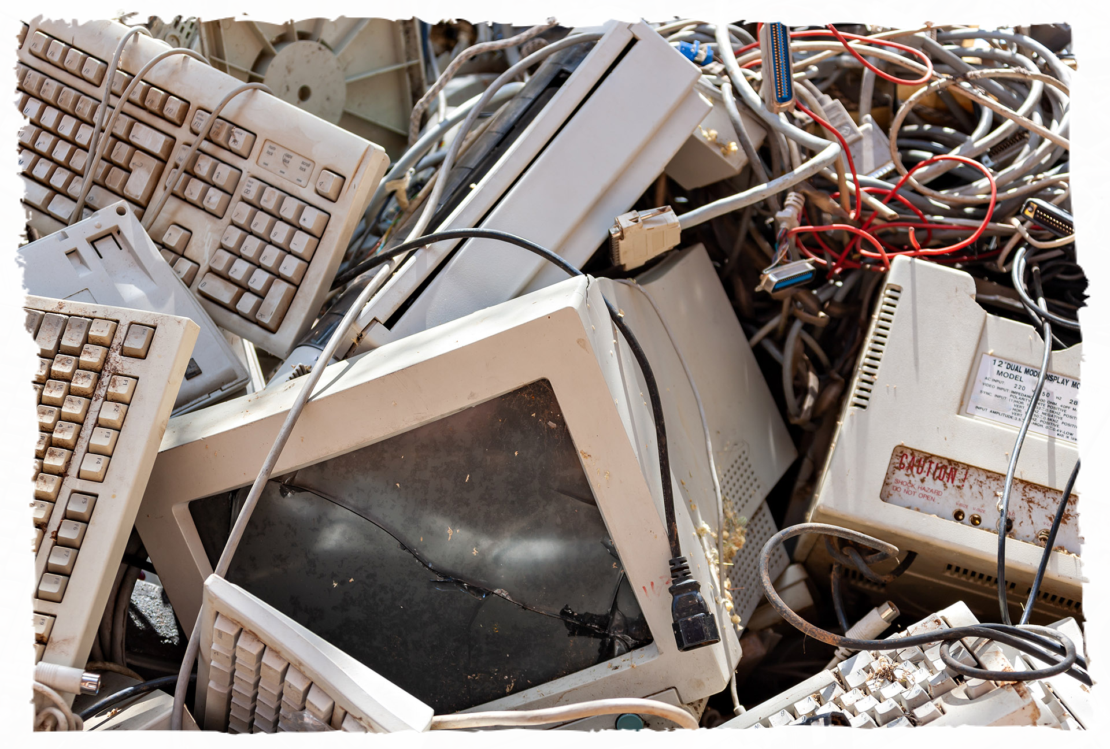
eLoop Works to Keep Electronic Waste Out of Landfills
by Amanda Waltz
April 27, 2021
Recycling remains a challenge for many in Pittsburgh and throughout Pennsylvania. While a truck may come to pick up various plastic containers, paper, and glass, there are no guarantees that those items will be recycled due a number of factors ranging from market demand to contamination. Then there's the added struggle to keep electronics out of landfills, as public waste management programs often don't collect these items.
This is where private companies like eLoop comes in. Founded in 2008, eLoop, which is based out of Export, Pa., provides recycling services to companies trying to find environmentally responsible ways to unload their hardware, computer monitors, and other IT equipment.
The company now serves over 400 clients in Pennsylvania, stretching as far as Scranton, Wilkes-Barre, Lancaster, York, and Harrisburg. They also have a second office location in State College.
But working with corporate clients means reassuring them that any information stored on hard drives, phones, and other gadgets won't be compromised. For this, eLoop provides a service that allows clients to track when any stored data is destroyed.
"As we've continued to grow and mature, we spend the majority of our time working with corporations that are looking to work with an environmentally compliant company like eLoop, that will protect their data," says eLoop president and CEO Ned Eldridge. "So, they have no data risk, and then can also take care of refurbishing and remarketing their devices, so they can get an extended return on investment from their original purchase price."
Eldridge says that, from 2008 until 2014, eLoop's focus was on handling residential electronic waste, but believed they could make a much larger and noticeable impact by acquiring corporate assets, then upcycling or refurbishing and reselling them. He adds that eLoop has an active group of wholesale buyers for its products, as well as retail buyers on online selling platforms like eBay and Amazon.
Eldridge credits the idea for eLoop to his previous work re-manufacturing and distributing aftermarket automatic transmission parts. This brought him to the recycling of electronics, which he says bears a lot of similarities to his previous business, as, like car parts, electronics are often "tied to a make and model."
"At the same time, I started worrying about things like sustainability, and understanding, recycling, reuse, some of these things are now part of the fabric of our business," Eldridge explains.
Electronic waste, or e-waste, has become an increasingly larger concern as consumers are urged to buy the latest upgraded smartphones, laptops, and other devices. Last year, the United Nations Environment Program released its Global E-Waste Monitor report, which found that a record 53.6 million metric tons of e-waste were generated in 2019. The report went on to say the growth of e-waste is "mainly fueled by higher consumption rates of EEE [Electrical and Electronic Equipment]," with consumer devices offering "short life cycles'' and "few repair options."
Also detailed in the report is that the whereabouts of the e-waste is largely unknown. On a global scale, around 17.4% of the accumulated 2019 e-waste was recycled, and 8% ended up in landfills or incinerated.
This has led environmental agencies all over the world to focus on making the public aware of the damaging impact of e-waste. Eldridge speaks to this, saying that electronics contain a number of harmful materials, including lead, mercury, and flame-retardants. If improperly disposed of, these, as well as other e-waste materials like lithium and barium, can find their way into the soil and groundwater, and into nearby bodies of water.
Even with that knowledge, many areas lack sufficient e-waste pickup and recycling. For example, while Pennsylvania adopted the Covered Device Recycling Act in 2010, which, according to the state Department of Environmental Protection, "requires manufacturers to provide recycling programs for desktop computers, laptop computers, computer monitors, computer peripherals and televisions sold to consumers in Pennsylvania," Eldridge says it comes up short.
"It's a very dysfunctional law," says Eldridge, adding that it gives the power to manufacturers to determine the amount of material they would collect, and opposed to just retrieving all of it.
While the Pittsburgh Department of Public Works does offer e-waste drop-off and curbside pickup services through its Electronic and Household Hazardous Waste Recycling Program, common items like televisions, computers, and other electronic devices are banned from being set out.
This is where companies like eLoop can fill in the gaps. Eldridge estimates that last year, eLoop "brought about 8 million pounds of electronics, out of the communities, whether it be corporate or residential, and less than 2% of that ended up in a landfill."
While eLoop focused mainly on corporate e-waste, it also provides drop-off services for residents discarding televisions, laptops, video game consoles, and other items, which the company will recycle for free or for a fee.
Eldridge says eLoop also works closely with and promotes organizations like the Pennsylvania Resources Council, a nonprofit that regularly hosts collection events and other resources for hard-to-recycle items and material reuse.
Mostly, though, Eldridge believes eLoop at least gives companies another option to safely and sustainably deal with e-waste.
"When you look at a private entity like ours, we pretty much can define what our limits are as far as what we're going to take and what we're not going to take," says Eldridge. "They don't know how to get rid of something.
We have the resources to figure it out. So, we always go the extra mile to make sure we help them do the right thing with their products.
Amanda Waltz
Amanda Waltz is a regular columnist with The Green Voice Weekly Newsletter