Eco-Tech
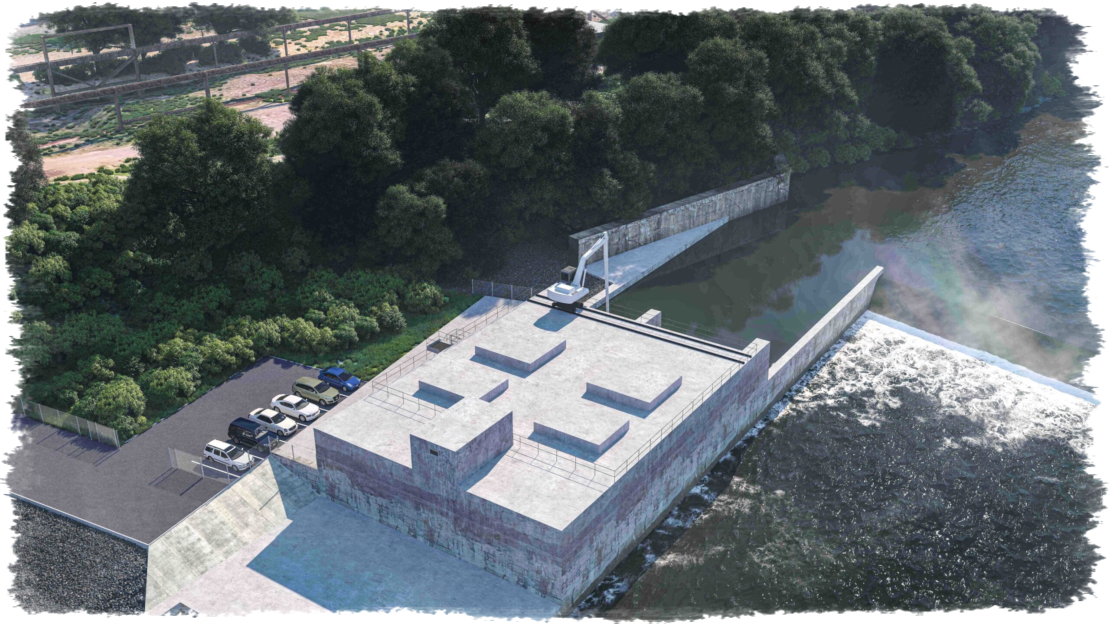
New Dam Project Reinforces Pittsburgh's Commitment to a Hydro powered Future
by Amanda Waltz
February 17, 2021
Solar power has received a lot of attention in Pittsburgh, but you would think that a place at the intersection of three rivers would focus more on hydropower, harnessing its waterways to generate clean energy.
One project demonstrates that Pittsburgh has, in fact, taken major, new steps to invest in hydropower. At the end of January, County Executive Rich Fitzgerald announced that Allegheny County had entered a deal with the Boston-based firm, Rye Development. The county signed a 35-year power-purchase agreement to buy clean energy locally generated by a 17.8-megawatt hydropower facility Rye will construct on the Ohio River, according to a press release.
“This is a landmark day for our county,” Fitzgerald said. “This announcement renews our commitment to the environment, our commitment to addressing climate change and is an investment in our future generations.”
The hydropower facility will be located at what is now the Emsworth Main Channel Dam, located near the towns of Emsworth, Avalon, and Ben Avon, Pa. Rye – which was chosen after the county requested proposals for hydro facility designs in April 2019 – coordinated on the project’s development with the United States Army Corps of Engineers, the original builders and current operators of the nearly century-old dam.
The hydropower project is scheduled to begin construction in late 2021. Rye CEO, Paul Jacob, believes building the privately-funded, $50 million facility will create 150 to 200 construction jobs. Once operational, two full-time workers will staff the plant, which could begin generating power by mid-2023.
The project promises to generate power all while having no impact on the recreational use of the waterways.
The Emsworth Dam is one of 10 hydropower projects Rye plans to build on all three of rivers in the southwestern Pennsylvania region. In 2018, the University of Pittsburgh signed a letter of intent to purchase 100 percent of the power created by a hydroelectric plant Rye will build on the Allegheny River at the Allegheny Lock and Dam No. 2 near the Highland Park Bridge. The deal was quickly followed by Pitt signing a 20-year power-purchase agreement.
A press release claims that the Allegheny Lock and Dam No. 2 facility is expected to begin operating in 2023 and will generate about 50,000 megawatt hours of electricity annually, enough to power about 25 percent of Pitt's main campus in Oakland.
“In a region that is water dependent, it’s both natural and smart to benefit from the flow of our rivers for clean power in the heart of the city,” said Pitt Sustainability Director, Aurora Sharrard, at the time the deal was complete. “Pitt looks forward to partnering with Rye, Allegheny County and others to further showcase, educate about, and research low-impact hydropower in the Pittsburgh region.”
Jacob echoes this, noting that southwestern Pennsylvania is “uniquely suited for run-of-the-river hydropower development because dams are already in place to facilitate transportation.”
“Energy is being wasted as water flows through those dams,” he said.
The future of the dams builds on other local efforts to invest in and expand clean energy projects, from the Port Authority of Allegheny County launching a fleet of electric buses to Pittsburgh International Airport becoming the first major U.S. airport to depend entirely on a solar and natural gas-powered microgrid.
It also aligns the county with climate goals set by the new administration of President Joe Biden. Not long after his inauguration, Biden promised to re-commit the U.S. to the Paris Agreement after former President Donald Trump pulled the country out of the global effort to combat climate change by drastically cutting carbon emissions. As outlined on the White House website, the Biden administration plans to develop clean energy strategies across its many departments, and put the U.S. “on a path to achieve net-zero emissions, economy-wide, by no later than 2050.”
Similarly, Allegheny County is a part of Pittsburgh 2030 District, a Green Building Alliance initiative that supports green construction, and strives toward a 50-percent reduction in energy and water use, as well as transportation emissions, by 2030 (a press release claims that the county has already committed five buildings spanning 1.6 million square feet to the effort). In 2021, the county also committed two county parks, White Oak and Deer Lakes, to the Net Zero Energy Parks initiative, which includes planting trees, managing stormwater, and installing solar arrays and electric vehicle charging stations.
However, Jacob says the remaining planned hydropower projects cannot proceed unless the company obtains power-purchase agreement contracts to finance and build the facilities.
“This contract with the county not only demonstrates its leadership and commitment to a sustainable future but also is integral to ensuring the successful construction and development of the Emsworth Main Channel Project,” said Jacob. “With this action, County Executive Fitzgerald has signaled to other stakeholders in the community that new hydropower on existing dams will provide 24/7 renewable energy while also resulting in local infrastructure investment.”
Amanda Waltz
Amanda Waltz is a regular columnist with The Green Voice Weekly Newsletter