Eco-Tech
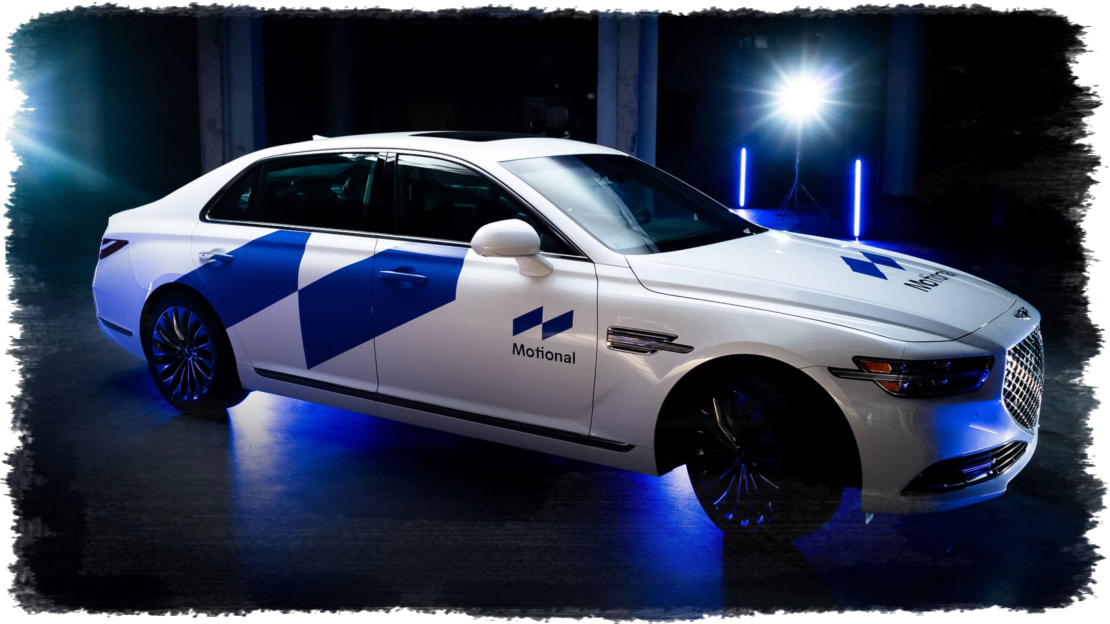
New Deal Promises Robotaxis in Some U.S. Cities — What Could This Mean for the Environment?
By Amanda Waltz
January 5, 2021
Two companies, one with operations in Pittsburgh, have reached a landmark deal to make robotaxis a reality throughout the United States.
Motional, an autonomous vehicle technology venture from Aptiv and Hyundai, recently announced a partnership with the rideshare company, Lyft, to launch a “multimarket robotaxi service in major U.S. cities” beginning in 2023, according to a press release. Motional currently has operations in Hazelwood Green.
The deal marks the largest robotaxi deployment partnership for a major ridesharing network. The fully-driverless vehicles will be integrated, operated, and deployed on the Lyft network.
“This agreement is a testament to our global leadership in driverless technology,” says Motional president and CEO, Karl Iagnemma. “We’re at the frontier of transportation innovation, moving robotaxis from research to road. Our aim is to not only build safe, reliable, and accessible driverless vehicles but to deliver them at significant scale. We’re partnering with Lyft to do exactly that.”
Carbon emissions from gas and diesel-powered cars, trucks and other vehicles have become a major contributor to climate change, demonstrating a need for cleaner transportation options and infrastructures. Robotaxis have become a possible part of that equation, but experts can only work on hypotheticals when it comes to their impact.
Experts have weighed the environmental benefits of self-driving vehicles for years as the technology has been tested and advanced, particularly by researchers at Carnegie Mellon University. Until recently, Pittsburgh streets served as a testing ground for the Advanced Technology Group of another rideshare giant, Uber. The city is also home to other autonomous vehicle tech companies, including Aurora Innovations, a Strip District-based company that took over Uber's Advanced Technology Group in December 2020, and Argo AI, which has deployed its own fleet of test vehicles.
A 2013 report from the U.S. Department of Energy concluded that, while the impact of autonomous vehicles “remain highly uncertain,” the use of the technology could either result in a 250% increase in energy consumption, or 90% in fuel savings. The latter would depend on several factors, including if self-driving vehicle manufacturers adopt electric instead of gas-powered systems, and if services like robotaxis led to there being fewer cars on the road.
That could alleviate some stress on the environment, as the Environmental Protection Agency (EPA) estimates that more than a quarter of greenhouse gas emissions come from the transportation sector.
Any potential environmental benefits would only come about if autonomous vehicles saw widespread use, something Motional hopes to advance. Along with its Lyft partnership, the company also announced plans to go fully-driverless and increase the availability of robotaxis for the general public.
Many experts theorize that the pandemic has led to a rise in demand for driverless vehicles, and not just in the U.S. In December 2020, CNN and other outlets reported that China would deploy fully driverless AutoX robotaxis on public roads in Shenzhen, adding to the more than 100 robotaxis AutoX had already deployed in five other Chinese cities, including Shanghai and Wuhan. The swift expansion was attributed to fears surrounding the COVID-19 public health crisis, as passengers looked for contactless services during their travels.
Right now, Motional and Lyft now operate what's touted as “the world’s longest-standing commercial robotaxi service in Las Vegas,” with Motional claiming it has so far completed over 100,000 trips since the service first became available to riders in May 2018. (A press release says the fleet was paused last year due to COVID-19 but became operational on Oct. 2020.)
Based on previous projects, the possibility of electric robotaxis looks like a real possibility. In 2019, Hyundai, the carmaker behind Motional, released a fleet of electric, autonomous Hyundai Kona crossovers as part of a pilot transportation program in California. The service combined a self-driving system from the Chinese autonomous startup Pony.ai with the ride-hailing platform, Via.
For those wondering if and when Pittsburgh will see these robotaxis, launch markets will be announced at a later date.
“We’re thrilled to have reached this milestone laying the groundwork for Motional’s driverless vehicles deploying on the Lyft network,” says Lyft CSO, Raj Kapoor. “This first-of-its-kind agreement is a testament to our collaborative approach for scaling self-driving vehicles in cities.”
Amanda Waltz
Amanda Waltz is a regular columnist with The Green Voice Weekly Newsletter