Sustainable Business P.O.V.
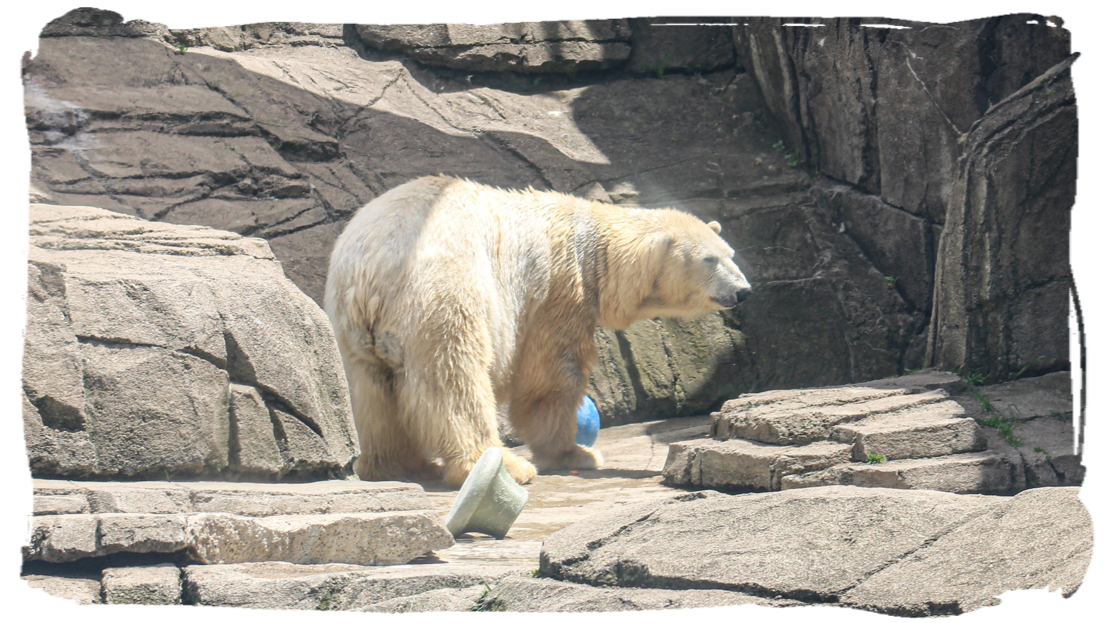
Pittsburgh Zoo & Aquarium’s Journey to Holistic Sustainability as a Wildlife Conservation Organization
By Stephanie Tonnesen Hornback
June 24, 2025
Zoos are increasingly recognizing their responsibility in promoting sustainability, not only through animal conservation but also through their own operations and by educating the public. This involves reducing environmental impact, using resources responsibly and engaging visitors in environmental stewardship, among other things.
Leading the charge has been the Association of Zoos and Aquariums (AZA), a 501(c)3 non-profit organization dedicated to the advancement of zoos and aquariums in the areas of conservation, education, science and recreation. AZA represents more than 251 facilities in the United States and overseas, which collectively draw more than 200 million visitors every year.
Last year, the Pittsburgh Zoo & Aquarium secured AZA accreditation – the gold standard illustrating overall excellence with the Zoo’s entire operation, including animal welfare, veterinary care, conservation, education, guest services, physical facilities, safety, staffing, finance and governing body.
It’s a journey that began in earnest in 2021 and was codified in the Zoo’s Strategic Plan 2022 – 2027. Recently, I had the opportunity to catch up with Dr. Shakfat Khan, Director of Conservation, Pittsburgh Zoo & Aquarium to discuss what jumpstarted their work, the challenges they’ve faced and a few of the successes they’re proud to have achieved on their sustainability journey.
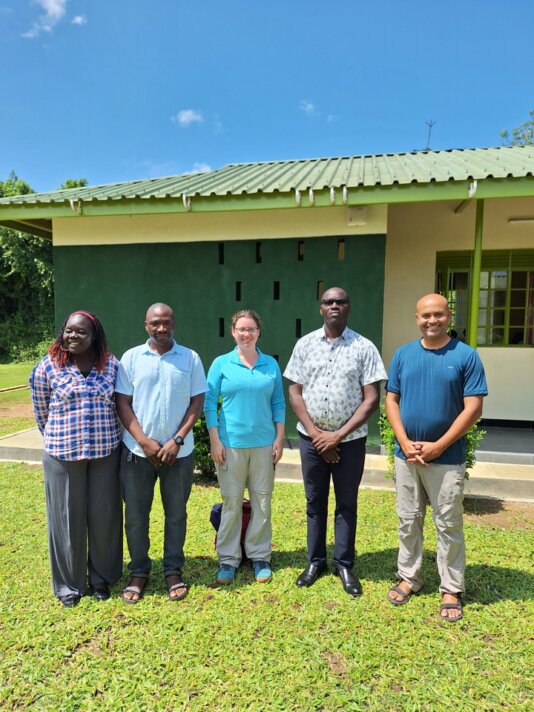
Conservation trip that Dr. Shafkat Khan (far right) and Dr. Jenn Torpie, VP of Education and Community Engagement (middle) took to Uganda.
Q. Tell us about any of the Zoo’s challenging sustainability moments. How did it work to overcome them?
One of the ongoing challenges in advancing sustainability at the Pittsburgh Zoo is that responsibility for sustainable practices is spread across multiple departments—ranging from animal care and horticulture to education, maintenance, and guest services. While each department contributes meaningfully to sustainability in its own context, we continue to work on the reduction of duplicated efforts, inconsistent practices and missed opportunities.
To address this, the Zoo recently started a regular conservation working group to set shared goals and communicate projects jointly—the meetings help align efforts, encourage the exchange of best practices, identify systemic changes that benefit the entire organization, and support the development of unified sustainability metrics and reporting.
By fostering a culture of shared ownership and open communication, the Pittsburgh Zoo has continued to move from a collection of siloed initiatives toward a cohesive, organization-wide sustainability strategy—one that reflects its mission of conservation and environmental stewardship more holistically and effectively.
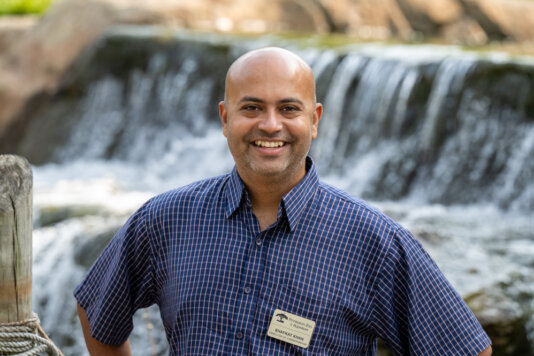
Dr. Shakfat Khan, Director of Conservation, Pittsburgh Zoo & Aquarium
Q. What led the Pittsburgh Zoo & Aquarium to its holistic view of sustainability as an institution that exists to advance wildlife conservation?
The Pittsburgh Zoo & Aquarium’s holistic view of sustainability is a natural extension of its mission to advance wildlife conservation on a scale ranging from local to global. As a leading institution with a presence in international conservation efforts, the Zoo recognized that protecting wildlife requires addressing the broader systems that impact ecosystems and communities around the world.
This perspective evolved from decades of hands-on experience in species preservation, habitat restoration, and community-based conservation—both locally and through the Zoo’s international initiatives, such as the International Conservation Center in Somerset, PA. It became clear that conservation success is tied not only to animal care and breeding programs, but also to sustainable practices that reduce environmental impact and promote resilience in both human and wildlife communities.
By integrating sustainability into its operations, education programs, and global partnerships, the Pittsburgh Zoo & Aquarium is modeling how institutions can lead by example. From reducing waste and conserving water to supporting sustainable livelihoods and fostering environmental awareness, the Zoo is committed to solutions that protect biodiversity and ensure a healthier planet for future generations.
Q. Is the Zoo happy with the progress it has made since 2022?
Sustainability for an organization with as varied operations as the Zoo can feel like a difficult goal to achieve. Still, the Zoo is steadfast in its approach and is encouraged by the momentum building around sustainability across the organization since 2022.
One of the most significant milestones was the adoption of the Climate Toolkit in 2024—a comprehensive framework created by Phipps Conservatory that now guides our sustainability planning and action. It has become a blueprint for long-term goals and measurable impact, helping us stay focused and strategic in our efforts.
Another point of pride is the activation of our Green Team, which has brought sustainability directly to our staff through hands-on employee learning opportunities. From classes on sustainable, biodiverse landscaping and composting to cooking workshops and even efforts on sustainable menstrual products, these programs are not only practical but empower staff to lead by example in their daily lives and work.
We're also seeing major progress in our energy sourcing. As a member of an energy consortium, the Zoo now sources 50 percent of its electricity from renewable energy, with a goal of reaching 100 percent renewable by 2030. This is a critical step toward reducing our operational carbon footprint and aligns with our conservation mission.
Q. What story would the Zoo like to share about its sustainability journey?
The Pittsburgh Zoo’s sustainability journey is a story of steady, meaningful change—built on practical action, long-term commitment, and a belief that even small steps add up to a larger impact. One story we are particularly proud to share is how we are rethinking everyday operations to reduce our environmental footprint and inspire others to do the same.
For example, the Zoo is in the process of transitioning all gas-powered landscaping and maintenance equipment to electric or battery-powered alternatives. Today, nearly two-thirds of our equipment is electric, helping us reduce emissions, noise pollution, and our reliance on fossil fuels.
We’ve also moved toward elimination of all single-use plastic bottles from our campus. Thanks to thoughtful agreements with our vendors, only recyclable bottles are now sold at concessions and encouraged at special events—a change that’s visible to every guest and reinforces our conservation mission in a tangible way.
The Zoo now composts nearly all of its organic waste, including animal manure, woodchips, and landscaping debris. It’s a full-circle approach that supports soil health, reduces landfill use, and models responsible stewardship of natural resources.
Q. What advice would they have for other organizations as they embed sustainability at the heart of their mission?
One key insight we have gained in our sustainability journey is the value of staying local—whether it is through partnering with regional vendors, sourcing materials nearby, or collaborating with local organizations. These relationships not only reduce our environmental footprint through decreased transportation and packaging waste, but they also strengthen community ties and support the local economy. Sustainability does not necessarily mean sourcing the most expensive "green" option—it often starts with simply looking around us.
We’ve also come to understand that while sustainability initiatives may appear costly upfront, they often become more affordable—and impactful—with thoughtful planning and creative thinking. By integrating sustainability into our operations from the start, rather than treating it as an add-on, we can find cost-effective, innovative solutions that align with both our mission and our budget.
Finally, one of the most important areas for growth is how we communicate our sustainability efforts. Telling our story—sharing the “why” behind our actions and the real-world impact of our choices—can be a powerful mission-aligned tool. It not only builds trust and engagement with our guests, donors, and community, but it also inspires others to take action. Sustainability is not just a responsibility; it is an opportunity to lead by example and deepen our relevance as a conservation-driven organization.
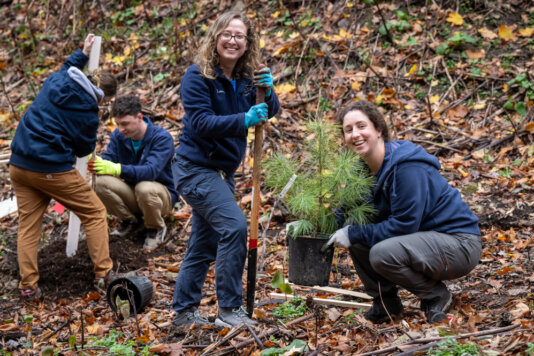
Members of Pittsburgh Zoo & Aquarium’s Green Team hard at work.
If your organization has a sustainability journey with lessons learned to share, the Futureproofing Business column would love to hear from you. Please email Stephanie Tonnesen Hornback at stephanie@hornbackparters.com.
 Stephanie Tonnesen Hornback
Stephanie Tonnesen Hornback is the founder of Hornback Partners LLC, a woman-owned strategy and communications firm that helps businesses to realize sustainability goals; develop and share impact stories; and, foster deeper relationships with key stakeholders, internally and externally. Follow her on social at @StephTHornback or visit www.hornbackpartners.com.